01Assess paint and material together
Paint type, age, porosity and existing coatings affect removal. We also consider the condition of stone and joints. With fragile surfaces in particular, the treatment must not cause more damage than the contamination itself.
02Use a trial area where needed
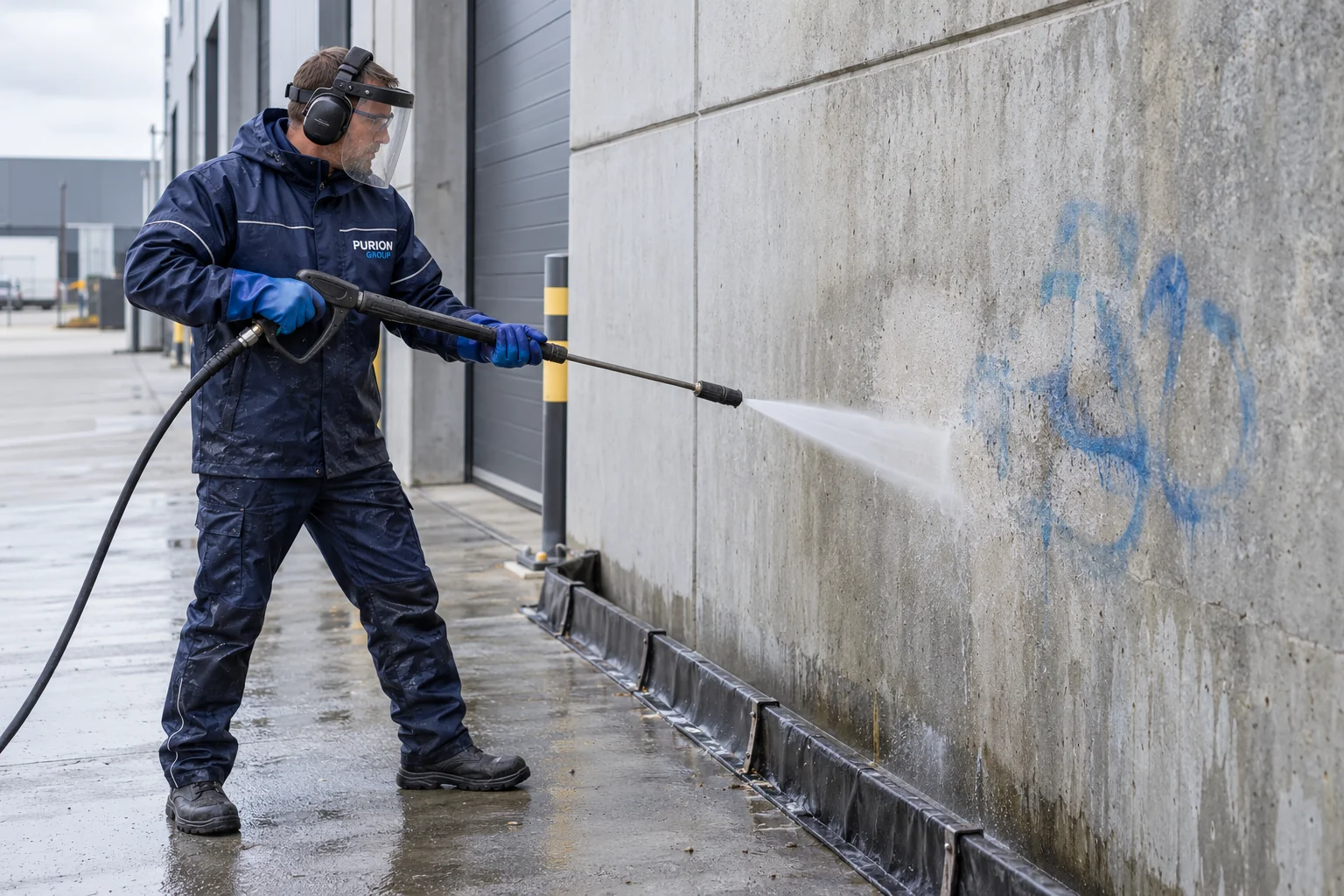
A small test shows how paint and substrate respond to the selected method. Contact time, rinsing, pressure and any heat are chosen accordingly. Pressure washing is a tool when appropriate, not a reason to treat vulnerable masonry more aggressively.
03Account for the surrounding area
We protect adjoining surfaces and prepare the work area for pedestrians and building users. Released paint and cleaning residues need controlled removal. Drainage and any specialist wastewater handling are considered in relation to the location and chosen treatment.
04Explain shadows and protection
Paint may penetrate deeply into a porous surface. A shadow or discolouration can remain despite careful cleaning, and we discuss this beforehand. Repairs and any protective coating are assessed separately rather than assumed to be included in graffiti removal.